
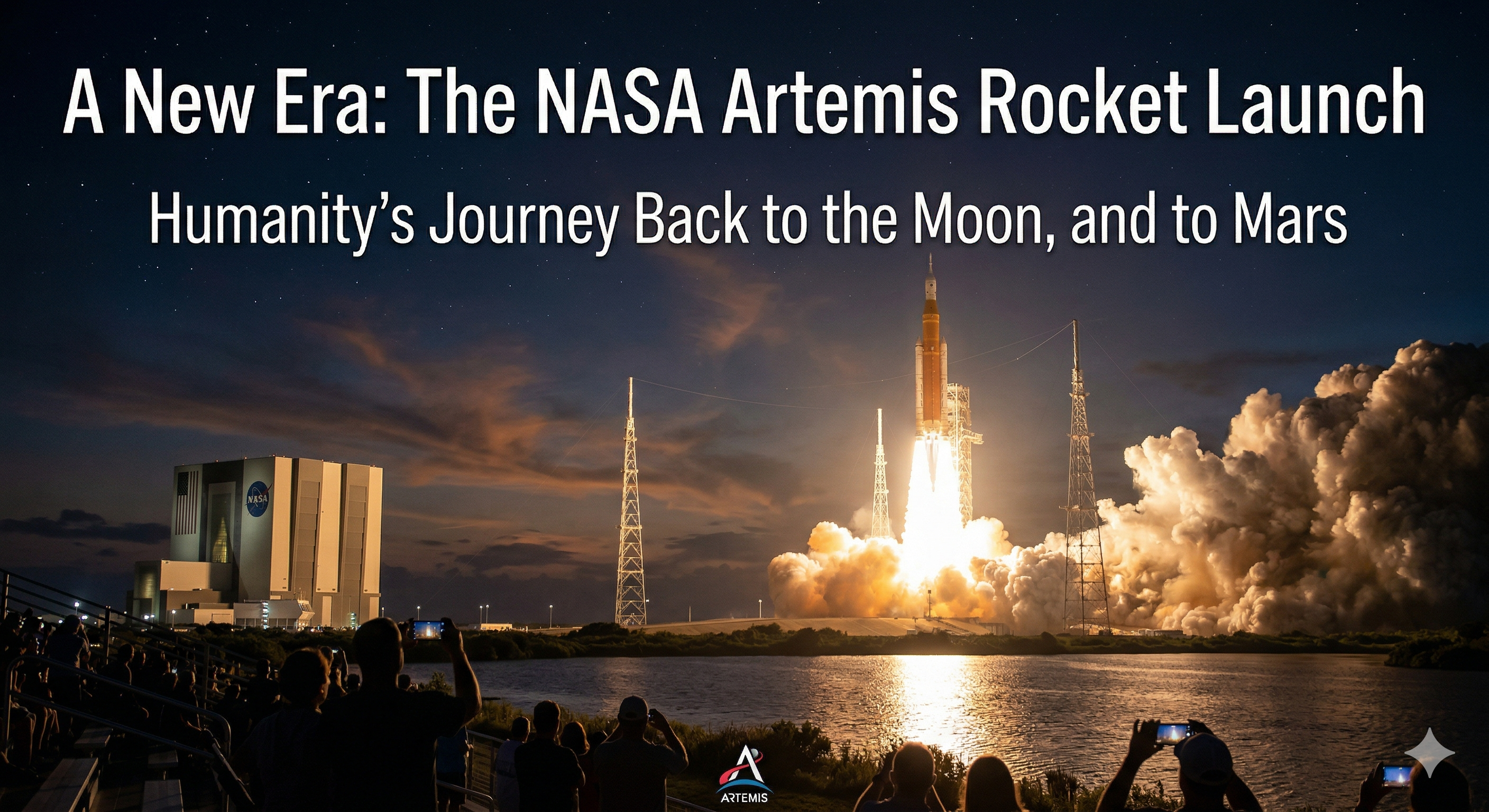
Humanity is standing at the edge of a giant leap. With the ambitious Artemis program, NASA is not just returning to the Moon—it is building the foundation for a permanent human presence in deep space. The 2026 Artemis rocket launches mark a historic turning point, redefining what is possible beyond Earth’s orbit
NASA Artemis Rocket Launch: A New Era of Space Exploration
Humanity is standing at the edge of a giant leap. With the ambitious Artemis program, every NASA Artemis rocket launch is more than just a flight; it is the foundation for a permanent human presence in deep space. As we look toward the 2026 missions, NASA is redefining what is possible beyond Earth’s orbit.
Understanding the NASA Artemis Rocket Launch Goals
The Artemis program is NASA’s premier initiative to return humans to the lunar surface. While the Apollo missions were about proving we could get there, the modern NASA Artemis rocket launch strategy is about staying there.
By landing the first woman and the first person of color on the Moon, NASA is ensuring that the next generation of space exploration is inclusive and representative of all humanity.
What is the NASA Artemis Program?
The Artemis program is NASA’s flagship initiative to return humans to the lunar surface for the first time since Apollo 17 in 1972. Named after the twin sister of Apollo in Greek mythology, the program represents a balanced and inclusive future, aiming to land the first woman and the first person of color on the Moon.
Unlike the short-duration missions of the 20th century, Artemis is built for sustainability. NASA is moving from “flags and footprints” to establishing a long-term lunar base and an orbiting space station.
The Power of the Space Launch System (SLS) Rocket
At the heart of the mission is the Space Launch System (SLS)—the most powerful rocket ever successfully flown.
| Feature | Specification |
| Height | 322 feet (Taller than the Statue of Liberty) |
| Thrust | 8.8 million lbs (15% more than the Saturn V) |
| Spacecraft | Orion Capsule (Crew module for deep space) |
| Payload | Designed for missions to the Moon and eventually Mars |
Artemis Mission Roadmap: 2022 – 2028+
NASA is using a step-by-step approach to ensure astronaut safety and mission success.
Artemis I (Completed – 2022)
An uncrewed test flight that successfully orbited the Moon. It validated the SLS rocket’s performance and tested the Orion heat shield during a high-speed re-entry into Earth’s atmosphere
Artemis II (Targeting April 1, 2026)
This is the first crewed mission of the program. Four astronauts—Reid Wiseman, Victor Glover, Christina Koch, and Jeremy Hansen—will fly a 10-day trajectory around the Moon. This mission will test life-support systems in deep space for the first time in over 50 years.
Artemis III & IV (The Lunar Landing)
-
Artemis III (2027): Will focus on testing the Orion spacecraft in Earth orbit and docking with lunar landers.
-
Artemis IV (2028): Currently slated to be the historic mission that returns humans to the Lunar South Pole.
Why the Moon’s South Pole?
The Artemis missions target the Lunar South Pole because of its unique geography. Shadowed craters in this region contain water ice, which is the “gold” of space exploration:
-
Life Support: Can be processed into drinking water and oxygen.
-
Rocket Fuel: Can be split into Hydrogen and Oxygen to refuel spacecraft.
-
Stepping Stone: Using lunar resources makes a future Mission to Mars more affordable and sustainable.
Global Collaboration & The Lunar Gateway
Artemis is a global effort. NASA is partnering with the ESA (Europe), JAXA (Japan), and CSA (Canada), alongside private innovators like SpaceX and Blue Origin.
A key component of this partnership is the Lunar Gateway, a small space station that will orbit the Moon. It will serve as a communication hub, a science laboratory, and a short-term habitation module for astronauts traveling to the lunar surface.
Global Collaboration and Future Tech
The Artemis program is a global effort involving agencies like the ESA, JAXA, and CSA, alongside private partners like SpaceX.
For more information on how these technologies work, visit our Internal Guide to Space Exploration or check the Official NASA Artemis Website for live updates.
Artemis vs. Apollo: A Comparison
Final Thoughts: Why Artemis Matters
The NASA Artemis rocket launches are more than technological milestones; they represent humanity’s long-term vision for survival and exploration. By learning to live on another world, we advance scientific discovery, ignite global inspiration, and prepare for the ultimate journey: Mars.